How to respond without making a negative review worse
A negative review calls for a calm, brief response, not a public argument. Knowing what not to say when responding to a negative review means avoiding blame, excuses, threats, private customer details, and promises you can’t keep. Acknowledge the concern, offer a practical next step, and take the conversation offline if resolving the issue requires a private discussion.
It’s understandable to want to correct the record, especially when a review feels unfair. But future customers are reading your response, too, and a defensive reply can make the exchange look worse than the original complaint.
This guide explains when to respond, what to say instead of common missteps, and when to invite the reviewer to continue the conversation privately. It also covers how to adapt your approach across Google, Yelp, and other review platforms so your response stays professional, relevant, and focused on a useful next step.
Key Takeaways
- Decide whether a review needs a public response, then pause before replying if the message has you feeling defensive.
- Acknowledge the customer’s concern and offer a clear next step instead of arguing over details in public.
- Move sensitive or complicated discussions to a private channel while keeping your public reply calm and helpful.
- Adjust your response to the platform and avoid sharing private information or using a generic, copy-and-paste reply.
- Use a consistent review response process to manage feedback across your business more effectively.
1. Should you respond to negative reviews?
Usually, yes. A calm, relevant reply shows readers that your business takes feedback seriously. Your response is for both the reviewer and everyone who may read the exchange later. Even a review that feels unfair can reveal what prospective customers want to know. Address the concern you can, and avoid turning the public thread into a debate.
Keep the goal practical: acknowledge the experience, clarify a relevant detail, and offer a next step. For example, if a customer says an appointment started late, recognize the delay and invite them to discuss what happened privately. Don’t argue that the customer misunderstood or claim the problem never happens. Those lines dismiss the reviewer rather than addressing their concern.
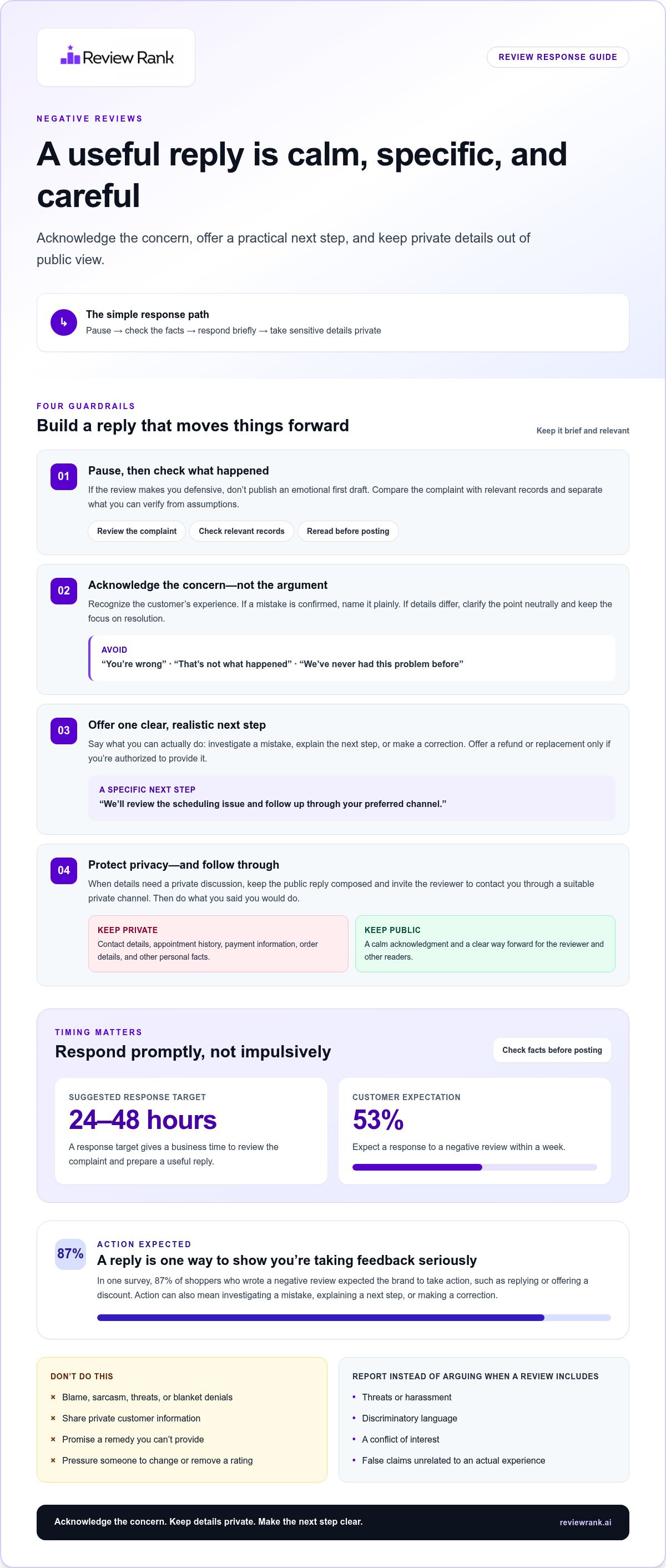
Defensive phrases include “You’re wrong,” “That’s not what happened,” and “We’ve never had this problem before.” They shift attention from the complaint to the business’s frustration. Knowing what not to say when responding to a negative review starts with removing blame, sarcasm, threats, and blanket denials.
Keep personal information out of public replies. Don’t disclose a customer’s full name, contact details, appointment history, payment information, or other private facts. Healthcare businesses should take particular care: HIPAA safeguards health information, and marketers should avoid identifying a patient or discussing specific medical care in a public response.
Respond promptly, but don’t publish an emotional first draft. A 24-to-48-hour response target gives a business time to review the complaint and prepare a useful reply. Customers also expect timely attention: 53% expect a response to a negative review within a week. Check the facts, draft a concise response, then reread it before posting.
For an angry or aggressive review, separate the tone from the issue. Don’t trade insults or answer every accusation line by line. Acknowledge the stated concern, correct only a clear factual error, and offer a private channel for details. If the review includes threats, harassment, discriminatory language, or a conflict of interest, report it through the platform’s review process.
On Facebook, respond directly to the review or comment with a short, composed message. Avoid discussing account or transaction details in the thread. For example: “We’re sorry your order didn’t meet expectations. Please message us with the order details so we can look into it.” Keep the public reply useful to other readers, too.
For an inaccurate review, distinguish a mistaken account from a review that appears unrelated to a real transaction or service. Correct a specific point without accusing the writer of lying. If the review contains false claims unrelated to an actual experience, abusive content, or a conflict of interest, report it rather than starting a public argument.
Negative reviews can reveal patterns that positive reviews may not. Record recurring issues, such as missed appointment reminders or unclear service updates, and share them with the responsible team. A public response addresses the individual complaint; tracking the feedback helps the business address the underlying experience.
2. Offering a resolution and taking conversations offline
A useful reply does more than defend the business. It shows the reviewer and future readers that you’re willing to address a specific problem. In one survey, 87% of shoppers who wrote a negative review expected the brand to take action, such as replying or offering a discount. Action can also mean investigating a mistake, explaining a next step, or making a correction.
Start by identifying what the reviewer says went wrong. Separate what you can verify from assumptions, then take responsibility for any confirmed mistake. If a customer reports receiving the wrong order, for example, acknowledge the mix-up and explain how you’ll review the order details. Avoid blaming a staff member or asking the reviewer to prove their experience publicly.
Make the proposed resolution specific and realistic. “We’ll review the scheduling issue and follow up through your preferred channel” gives a clearer next step than “We’ll make this right.” Don’t offer a refund, replacement, or other remedy unless you’re authorized to provide it. A promise the business can’t keep can deepen frustration and damage trust.
Move the conversation offline when resolving the issue requires order numbers, appointment details, contact information, or back-and-forth about individual circumstances. Keep the public reply brief: acknowledge the issue, say you want to look into it, and invite the reviewer to contact the business through a suitable private channel. Don’t ask them to post personal details in a public thread.
Taking a conversation offline doesn’t mean abandoning the public response. Readers should still see that you recognized the complaint and offered a clear way forward. For example: “We’re sorry the delivery arrived incomplete. Please contact our team with your order details so we can review what happened.” If the reviewer contacts you, follow through on the next step you promised.
Take criticism seriously, even when you disagree with part of it. Compare the review with relevant records, such as the booking time, receipt, or service notes. If the records confirm a mistake, name it plainly and explain the corrective action. If the details differ, don’t call the reviewer dishonest; clarify the point neutrally and keep the exchange focused on resolution.
A resolution should match the problem, not serve as payment for a better rating. Don’t pressure someone to remove criticism or change their score in exchange for help. Give them a genuine chance to explain what would address the issue, then state what the business can do. The reviewer decides whether to update their feedback.
For teams handling frequent feedback, AI-generated review responses can help prepare a starting draft. A staff member should check the facts, make the reply specific to the complaint, and ensure any offered next step is achievable before publishing.
3. Thanking reviewers and apologizing sincerely
A sincere response recognizes the customer’s effort without sounding scripted. Thank the reviewer for sharing a specific concern, then address the experience they described. For example: “Thank you for telling us about the long wait. We’re sorry your appointment started late.” That reply acknowledges the impact instead of treating the review as an attack.
Keep the apology focused. The guidance recommends limiting an apology for a negative review to one sentence, which helps avoid a reply that feels excessive or unprofessional. “We’re sorry the order arrived incomplete” is direct. Several sentences repeating “we apologize” can distract from the practical next step.
An apology doesn’t need to claim facts you haven’t checked. If a reviewer reports a problem but the cause is unclear, express empathy for their experience without presenting an unverified account as fact. For example: “We’re sorry this was frustrating, and we’d like to understand what happened.” Then explain how the customer can continue the conversation privately.
That distinction matters. “We’re sorry you feel that way” can sound dismissive because it places the problem on the reviewer’s feelings. “We’re sorry you had to wait longer than expected” recognizes the reported experience. Avoid using “if” to weaken a genuine apology, as in “We’re sorry if you were inconvenienced.” It can make the concern sound hypothetical.
Taking accountability means naming what the business can own, not automatically accepting every claim. If a confirmed scheduling error caused a missed appointment, say so plainly and describe the corrective step. If staff are still reviewing the details, don’t blame an employee or imply the customer must be mistaken. Separate what you know from what you’re investigating.
Some responses call for thanks, not an apology. A reviewer may point out confusing instructions or a difficult booking process rather than describe direct harm. Thank them for identifying the specific issue, then say what the business will review. This makes feedback an opportunity to improve a real process, not a cue for a generic apology.
Business owners apologize in 13% of review responses. The useful measure is not how often a business says sorry, but whether the words match the situation. A brief, sincere apology fits a confirmed service failure; a clear expression of concern fits an unresolved account. Neither should be followed by a demand to change or remove the review.
Before publishing, check that the response includes three things: the reviewer’s concern, an appropriate expression of thanks or regret, and a realistic next step. Remove defensive lines such as “That’s not our fault” or “No one else has complained.” The finished reply should show accountability while focusing on the customer’s experience and what the business can do.
4. Moving complex discussions to a private channel
A public review thread is a poor place to reconstruct a complicated timeline. Move the conversation when it requires several messages, staff input, or details that don’t belong in public. For example, a hotel guest may describe a booking change, room issue, and billing question in one review. A short public reply can acknowledge each concern, then direct the guest to a private contact route to discuss the account.
Make the transition clear rather than abrupt. Explain why a private conversation will help: “We’d like to review the booking details with you so we can understand the sequence and respond accurately.” That gives the reviewer a reason to continue. Avoid a bare “Contact us,” which can sound dismissive and leave readers unsure whether the business intends to help.
Offer a specific, appropriate route, such as the business’s support email, phone line, or platform messaging feature. Name the team or channel the reviewer should use, and explain what to include without requesting sensitive information publicly. For example, a repair shop could invite the customer to message its service team with the vehicle’s service date. Keep the invitation simple and relevant.
Once the customer moves the discussion offline, keep the private conversation organized. Review the issue using the same facts the reviewer described, ask focused questions, and record the agreed next step. If a restaurant customer reports a missing delivery item, confirm privately which order detail is needed. Don’t make the customer repeat the full story to multiple staff members.
Private communication shouldn’t become a way to avoid accountability. If the business identifies a clear mistake, explain the correction directly to the customer and complete the agreed action. Then consider whether a brief public follow-up would help readers understand the outcome. For example: “We connected with the guest and addressed the reservation issue.” Don’t reveal personal details or publish the private exchange.
Some reviewers won’t continue offline. In that case, keep the public response steady and useful. Don’t post repeated demands, imply the reviewer is unreasonable, or turn the thread into a defensive exchange. Acknowledge the concern, say the invitation remains open, and stop replying unless the reviewer adds relevant information that needs a response.
Set an internal handoff before inviting someone to contact the business. Identify who will own the case, where staff will record it, and how the team will track the promised follow-up. For a multi-location business, route a complaint about a specific branch to the team with access to that visit’s details. A clear handoff keeps the conversation moving instead of sending the reviewer between departments.
Use the public reply to show that the conversation has a path forward, not to win an argument. When the issue needs context, move it offline; when the exchange ends, close the loop without exposing private information. This balance lets readers see a calm response while giving staff room to resolve the details directly.
5. Responding to reviews on Google, Yelp, and other platforms
A review response lives on its platform, so tailor the message to the context. Google, Yelp, and Facebook display customer feedback differently, but the core standard stays the same: address the specific review, keep the tone professional, and avoid exposing private details. Don’t automatically copy a reply written for one site to another.
Start by identifying the platform and the issue. On Google, a response may appear beside the review as people compare local businesses. On Yelp, readers may encounter the reply while assessing a service provider. On Facebook, a complaint might sit within a broader public discussion. In each case, respond to what the reviewer actually said, not an imagined audience or a different complaint.
Keep platform policies in mind before reporting a review. If a post includes abusive language, threats, or content unrelated to a real experience, use the platform’s reporting process. Don’t claim that a review will be removed or accuse its author publicly. A business can report content and still post a calm, factual reply if that would help readers.
Consumers read business responses, not just star ratings. One reported finding says 89% of consumers read responses to negative reviews. Another says 63% of customers have never received a response to their own review. Those figures make consistency visible. A concise, specific message can show that the business is engaged, even when the platform’s audience and review format vary.
Timing matters across platforms. A 24-hour turnaround is an advised target for negative reviews, while customer expectations and team capacity can shape the workflow. Assign someone to monitor Google, Yelp, Facebook, and other relevant profiles. A shared record helps staff see which reviews received replies and which issues still need follow-up.
Don’t let platform differences change the facts. If a customer raises the same delivery problem on Google and Facebook, keep the explanation consistent while adapting the wording to each thread. Avoid pasting a generic reply that ignores the complaint. In a BrightLocal 2026 survey, generic replies put off 50% of consumers.
For a detailed complaint, keep the public reply brief and invite the reviewer to continue privately through an appropriate channel. On every platform, avoid asking customers to post contact details or account information publicly. If a review contains health or other sensitive information, don’t confirm or expand on those details in your reply.
Build a simple platform response routine: review new feedback, identify the central issue, check relevant records, draft a tailored reply, and confirm any next step. To streamline drafting while keeping replies specific to each platform, explore AI-generated review responses.
Review Rank Ai: Automated Review Invites
Review Rank Ai sends Automated Review Invites through WhatsApp, SMS, and email. Its WhatsApp integration makes the messaging channel part of the review-request workflow, alongside text and email outreach. Businesses can use these familiar channels to ask customers for feedback after an interaction. AI-Generated Review Responses can also help prepare replies for a team member to review and personalize before publishing.
The Google Local 3-Pack Leaderboard helps businesses monitor local search rankings. These tools support separate parts of review management, from inviting feedback to preparing responses and tracking visibility.
Visit Review Rank Ai to learn more.
Make your next response part of a stronger process
Knowing what not to say when responding to a negative review is only the starting point. The next step is to make thoughtful replies part of how your team handles customer feedback. Assign a clear owner for each response, agree on a tone that reflects your business, and record follow-up actions so they don’t disappear after the public exchange ends.
A simple review-response playbook can help staff make consistent decisions without making every reply sound identical. Include examples of how to acknowledge a concern, when to move a discussion to a private channel, and who can approve a proposed resolution. Then use real customer feedback to refine those examples as your team learns where clearer guidance would help.
Review Rank Ai can be a next step for businesses looking to strengthen their review workflow. Contact Review Rank Ai to discuss your review management needs. With a clear process and the right support, your team can turn difficult feedback into a more confident customer experience.
Frequently Asked Questions
Should you respond to negative reviews?
Yes, respond when you can offer a useful, professional message for the reviewer and future customers. A reply can clarify a service detail, show how the business handles feedback, or explain how to reach the right team. For example, if a customer says a product arrived damaged, acknowledge the problem and describe the appropriate support route. Skip a reply only when it would expose private information or escalate abuse.
Is it okay to ask a reviewer to change their rating?
Don’t pressure someone to change or remove a rating, and never make help conditional on an edit. If you resolve the issue, you may politely let the reviewer decide whether to update their feedback. Keep the request separate from the remedy. For example, say, “We’ve addressed the issue. You’re welcome to update your review if you feel your experience has changed.”
What should businesses avoid saying in a response to a negative review?
Avoid blame, sarcasm, threats, accusations, and claims you can’t verify. Lines such as “You’re lying,” “That’s your fault,” or “We never make mistakes” invite an argument instead of addressing the customer’s concern. Also avoid mentioning private account or appointment details. A safer approach is to recognize the issue, clarify only relevant facts, and offer a constructive next step.
How can a business respond professionally to an angry customer review?
Keep the reply composed, even if the review uses hostile language. Identify the specific concern and address that issue rather than matching the reviewer’s tone. For example: “We understand the delay disrupted your plans. Our team would like to review what happened.” Avoid posting a lengthy point-by-point rebuttal. If the discussion needs personal or transaction details, invite the reviewer to continue through a private channel.
Should businesses apologize publicly when responding to a negative review?
Yes, a brief public apology can be appropriate when a customer describes a poor experience. Make it specific and sincere, such as, “We’re sorry the instructions were unclear.” Don’t make an apology conditional or dismissive with “if you were upset.” If the facts are still under review, express concern for the experience without claiming to know exactly what caused it.
Can businesses offer refunds or discounts in public review responses?
A business can mention a potential remedy, but avoid publishing private transaction details or making a promise before confirming what it can provide. A safer public reply is, “Please contact our support team so we can review the purchase and discuss the available options.” Handle eligibility and personal information privately. Never tie a refund, discount, or other resolution to changing or deleting a review.
How should businesses respond to fake, abusive, or defamatory reviews?
Stay factual and don’t label a reviewer a liar. If a review appears unrelated to an actual transaction, contains threats or harassment, or includes discriminatory language, report it through the platform’s review process. You can also post a brief response focused on verifiable information. Avoid repeating harmful claims or arguing about legal labels in public; preserve relevant records for internal review.
What are Google’s rules for responding to negative reviews?
Keep replies relevant, respectful, and free of private customer information. Don’t use threats, discriminatory language, or incentives tied to changing a rating. If a review appears abusive, unrelated to a real service, or otherwise inappropriate, use Google’s reporting tools rather than trying to remove it through a public argument. Check Google’s current content policies before reporting, since platform requirements can change.